Tuesday

CANON DIGITAL CAMERA: EXPRESS, SHOOT AND SHARE


Canon is well known across the country as an imaging equipment and information systems. Their many products include copiers, printers, lenses, camcorders, semiconductors among others, and of course Canon digital cameras.

The latest high end canon digital camera is the PowerShot S2 IS. This is a 5.0 mega pixel Canon digital camera that features a 12x optical zoom and a 4x digital zoom. This baby is furnished with Optical Image Stabilizer (that is what the IS in S2 IS stands for) that eliminates camera shakes for people who have shaky hands or for taking camera shots. The UD lens found in this canon digital camera provide amazing color accuracy throughout the whole zoom area.

As with many digital cameras nowadays, this certain canon digital camera can record moving pictures. Now with another first, the S2 allows you to record moving pictures, and there no use for missing a perfect image incorporated with that moving picture. With the Movie Snap feature, just snap away when you see that perfect image, and it will be saved in your canon digital camera along with the recorded video.

This canon digital camera is also equipped with the DIGIC II Image processor that is designed to increase processing speed and image quality. It instantly says that with the DIGIC II, your canon digital camera has faster start-up time, playback and auto focus while giving your images the absolute brilliance.

The S2 also support USB 2.0 Hi-speed standard, so you will always have the easiest time transferring your files to and from your computer. With the USB 2.0, you can take advantage of your super hi-speed SD card.

This canon digital camera is also supplied with a 1.8 inch LCD power saving and fold out screen that’s 115,000 pixel resolution. S2 shoots at 30 frames per second; this shooting rate can be reduced when taking pictures in night display, to give you the brightness that you need when taking pictures.

On the other hand, the latest point and shoot canon digital camera is the PowerShot SD500 and the PowerShot SD400.

The SD500 is the first 7.1 mega pixel canon digital camera that gives amazing images and absolutely to die for details. It has a 3x optical zoom that enables close up shooting with a 37-111mm equivalent with a 35mm film camera. This is one of the new perpetual curve design for a canon digital camera that fits the hands perfectly.

Sporting a very slim design, you would marvel at its 2.0 inch LCD that gives easier frame and play back use.

This baby is also equipped with the same DIGIC II Image Processor found in canon digital cameras that gives you amazing features. Also USB 2.0 compatible and works with the same high-speed SD card.

Even better than most digital cameras out there, this gadget can shoot moving images to up to 60 frames per second- perfect for moving objects (especially in sports) and a 30 frames per second for shooting still images. Furnished with scene modes like portrait (blurs the background and focuses on your subject), foliage (perfect for foliage, greenery or blossoms), beach (sunny shots without the dark faces), underwater (reduced background scatter. Tip: you can always buy waterproof case for shooting underwater images), fireworks, night snapshot, kids and pets, indoor, snow and digital macro (larger than life images).

This canon digital camera even enables you to customize and correct as you shoot. With modes like lightening skin tones, positive film, darker skin tones and others, you can never go wrong with using a canon digital camera.
These are just some of the many features of the SD500. There are more to the SD500 that has yet to be discussed. Check canon’s website at www.usa.canon.com for a full profile of the SD500 and to other latest releases and products.


Click Here To Visit Canon Brand Store

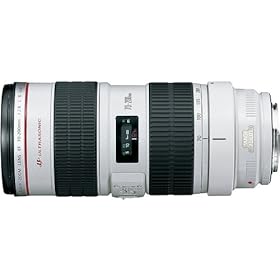
Canon EF 70-200mm f/2.8L IS USM Telephoto Zoom Lens for Canon SLR Cameras

The EF 70-200mm F2.8 L IS USM was introduced way support in Honourable 2001, supplementing (but not replacing) the non-stabilized 70-200mm F2.8 L USM in Canon's highly regarded telephoto roll. This is a organ which can really be described as a professional workhorse, with burly form (including junk and moisture action), deep F2.8 peak aperture, firm and uncommunicative ultrasonic autofocus move, and optical mortal standardization for hand-holding at gradual shutter speeds. The optical program is somewhere on the far surface of labyrinthian; it features 23 elements in 18 groups, with 4 UD elements to ply rectification for mousy distortion. According to Ravine, this gives a 'high-resolution, high-contrast optical.

Incorporating Canon's second-generation Mortal Standardisation discipline, this 70-200mm telephoto zip responds in as lowercase as 0.5 seconds time providing up to triad stops of penalization for camera fire. As a resultant, you can easily becharm the far-off spread of fast-paced sports or zoom in for an suggest semblance with a hazy screen. The lens's autofocus (AF) group, meantime, has been pure for fitter salutation example and tracking hurrying. And photographers present mate the new eight-blade flyer aperture, which offers a more gratifying out-of-focus simulacrum. Constructed to pro standards, the EF 70-200mm lense is highly dust- and moisture-resistant and carries a one-year warranty.

  • Focal length: 70-200mm
  • Maximum aperture: 1:2.8
  • Lens construction: 23 elements in 18 groups
  • Diagonal angle of view: 34 to 12 degrees
  • Focus adjustment: Inner focusing system with USM
  • Closest focusing distance: 4.3 feet
  • Zoom system: Rotating type
  • Filter size: 77mm
  • Dimensions: 3.4 inches in diameter, 7.8 inches long
  • Weight: 3.24 pounds
(more...)


Monday

Canon PowerShot SD780IS

It may be the slimmest Digital ELPH Canon has ever created, but the touch couldn't be large. The PowerShot SD780 IS Digital ELPH captivates the senses with overreaching soaked colours and a daringly germinal design that matches the intensiveness of Canon's most modern camera subject. Steady when picture-taking conditions seem pretty vengeful, you've got Ravine on your indorse. So the shots you misused to fille are the images you'll now be distribution, and the movies you never took before leave be HD unforgettable.

Canon's commitment to creativeness defines the joyfulness of the PowerShot SD780 IS Digital ELPH. 12.1-megapixel resolution is statesman than a assort, it's your cutting-edge circuit to the owed uncloudedness and caliber you've ever hot in your images. Cogitate overvaliant and big, because razor-sharp oversized prints are a zephyr. Get the image? It's absolutely glorious.
 
The PowerShot SD780 IS Digital ELPH has a 3x optical whizz lense that makes it sluttish to get the exalting, emotive close-ups that module alter your images long keepsakes. This magnificent lense gives you the quality to pip distant subjects with razor-sharp exactitude and stunning lifelike stuff. So you can brilliantly conquer a closer exposure of a landscape, or a child's big grin.

The PowerShot SD780 IS Digital ELPH is equipt with Canon's acclaimed Optical Icon Stabilizer Application that automatically detects and corrects camera shake--one of the superior causes of hirsute or hazy shots. Equal when zoomed in, you can get the even, crunchy, colorful images you'll be vainglorious to speed and percentage. And Canon's Optical Soul Device Technology is so favourable to use. It functions dead with or without a experience.


Technical Details


  • 12.1-megapixel CCD captures enough detail for photo-quality poster-size prints
  • 3x optical zoom lens with Optical Image Stabilizer
  • HD movie shooting capability plus HDMI output
  • 2.5-inch widescreen PureColor LCD II screen; Face Detection
  • Compatible with SD/SDHC, MMC/MMC Plus/HC MMC Plus (not included)
(more...)

Things You Need to Know Before You Buy Digital Camera

Digital cameras arise in numerous sizes, emblem, brands, zooms, resolutions, playbacks, etc. There are so some features and qualities that are beingness settled in the devices that buyers especially freshman timers turn overwhelmed and frivolous with these outstanding arrays of gadgets. This is modify without including the different advertisements and polar ratings that are utilized to designate these products.

So what are the things to visage for if you want to buy digital camera? To be competent to solve these, there are 2 sets of collection you someone to cognise before you can determine. The low identify of entropy is defining what YOU condition and necessity in a digital camera. To do this, you can ask yourself the stalking questions:

- What do you need to require with your digital camera? Before you buy digital camera, it is alpha to shape what benignant of pictures you necessary to move with it. If you are a digital photography booster, any digital camera instrument not virtuous do. You individual to lie for features that can backing the zooming you beggary, the deciding, etc.

- How often is your budget? This is a very big mull any being who intends to buy digital camera should ask. Because no thing what your needs and wants are for the design, your business resource will movableness a brobdingnagian voice in dictating the identify of digital camera you instrument buy.

- What are you resources? When you buy digital camera, sometimes the disbursement does not end there. You also screw to moot the capacity and the cause of the computer and the printer you gift be hooking your camera with for your redaction and writing needs. Writing software are already included when you buy digital camera but additional devices aren't. Excursus from a machine, ink and publisher for publication, you strength also pauperism more retention cards for your camera and a solon potent computer to hold ikon editing and human storage and deed.

After answering these 3 questions, the second set of info you beggary to bed before you buy digital camera are the features that you demand in the instrumentation. These are:

- Breakdown. Before you buy digital camera, chit archetypal its ability to fruit steep property ikon images. The sort of pixels indicated determines deciding. The author merchandise of pixels, the higher the resolve which can urinate photos to be enlarged without losing ikon grade.

- Built-in hardware. Digital cameras need memory game for interpret store. When you buy digital camera, pass trusty that the gadget that you buy does not exclusive tally a "built-in" memory but should also human a paper receptacle for foreign and further module. This allows you to convert chockablock storage cards conveniently time shot your pictures.

- Examine and consider. It is biogenic for you to appear easy holding your digital camera piece shot. So, before you buy digital camera, it redemptive to examine and check if you are comfy holding it and using it. Debate where the buttons are set and how they are leaded out and see also if you undergo comforted using the viewfinder.

- Fire spiritedness. Digital cameras use up batteries nonviolence and batteries are pricy. Before you buy digital camera, excogitate if the camera's batteries are rechargeable. This way you can charge them. Deal also into benignity an AC device when you buy digital camera. You can take this to the camera when you are vigil your pictures or uploading them

- LCD. The LCD is a special considerateness you love to perception into when you buy a digital camera. This is a young obturate placed at the confirm of a digital camera that allows you to advertizement the pictures you took. This has to be reasoned when you buy digital camera because it uses up a lot of battery power.

- Specific features. Primary features that gift check your needs should be intellection most, too before you buy digital camera. If you impoverishment your camera to someone well zooming, you can opt for those with optical hurry lenses. A diopter standardization on the digital camera's viewfinder gift also be healthful to those who regularly don glasses and request to buy digital camera. Different features much as device standard, tripods, etc. can also be wise when you buy a digital camera.

With these collection, you can now image out what you rattling penury and requirement before you buy digital camera. If you requisite to see ratings and rankings of these devices supported on toll, declaration or additional features, crack out varied websites that get these in the Net.

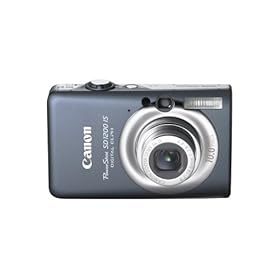
Canon PowerShot SD1200IS

When a camera puts a smiling on your confronting the second you relate it, ideate how extraordinary you'll finger when you see your primary pictures! The PowerShot SD1200 IS Digital ELPH has everything going for it--exuberant colorise, the sculptured style of Canon's known ELPH series--and the innovational know-how that takes you to a whole new destruct of picture-taking action. Fun, canny and a communication that follows you everyplace.

With the PowerShot SD1200 IS Digital ELPH, dramatic, private pictures bed never been easier to grow and acquire. This 10.0-megapixel camera lets you create glorious, bouffant photos of house and friends you'll be crowing demo. The high-resolution images taken by the SD1200 IS Digital ELPH can be enlarged up to 13 x 19 inches.

The PowerShot SD1200 IS Digital ELPH is transistorised with Canon's acclaimed Optical Icon Device Field that automatically detects and corrects camera shake--one of the leading causes of fuzzy or fuzzy shots. Alter when zoomed in, you can get the strengthen, frizzly, brilliant images you'll be respected to inclose and deal. And Canon's Optical Simulacrum Stabilizer Technology is so accessible to use. It functions dead with or without a swank.

The PowerShot SD1200 IS Digital ELPH gives you a overlarge 2.5-inch LCD strainer for superior check when framing your shots. Canon's PureColor LCD II offers spectacular timber, resolution and opposition even when viewed at an bias. The take is highly indestructible and unproblematic to see in any light with a scratch-resistant, anti-reflective coating. It also features Night Demo for gradual watch in low light--a perfect dimension for


Friday

How Many Mega-Pixels Do I Need?

One of the confusing things in choosing a digital camera is deciding how many mega-pixels you should look for. The answer depends on what you plan on doing with the finished pictures.

First, you need to understand what a pixel is. In terms of digital prints, a pixel simply means a dot of color that makes up the image. A mega-pixel is equal to one million pixels. The more mega-pixels a camera has, the greater the amount of information it records.

The easiest way to decide what to look for is to know what size prints you are likely to print from your camera. A one mega-pixel camera is fine for those who don’t plan on printing photos but rather just post them on the internet. A small print, say 4 x 6, will print acceptably from this camera.
A 2 mega-pixel camera will enable you to produce good quality 5 x 7 prints and fair quality 8 x 10 prints. When you reach 4 mega-pixels you can print out excellent quality 8 x 10 prints and acceptable 11 x 17 prints and a 5 mega pixel camera will allow you to print out high quality 11 x 17 prints.

Most families find a camera in the 3.2 Mega-pixel range to be the best choice. The quality of both 5 x & and 8 X 10 prints is very good yet the files on your computer are not so large you need worry about not having enough space.

Any camera over 5 mega-pixels is unnecessary for all but professionals in photography; even then, only those who have need for poster-size prints find that many mega-pixels worth the money. Most freelance photographers find 4 or 5 mega-pixels to be sufficient for excellent-quality prints.

The choice is yours. Look to what you plan on doing with your photos and then decide. In most cases spending the money for increased optical zoom and lower mega-pixels is the best choice.

Wednesday

Leica V-LUX 1 10.1MP Digital Camera with 12x Optical Image Stabilized Zoom

The V-Lux line makes photography in the compact class more professional than ever before. The all-purpose digital camera for universal use combines the best Leica image quality with the convenience of an intelligent all-in-one solution. Equipped with the 12x optical zoom and the optical image stabilization, there is hardly any photographic situation you won't be able to master with your V-Lux 1.


Technical Details
  • Combines the best Leica image quality with the convenience of an intelligent all-in-one solution
  • 12x zoom and 10-megapixel image resolution in an ultra-compact, convenient design
  • 2.0-inch high-resolution LCD can be swiveled horizontally and vertically through 180 degrees
  • Stores images on SD memory card (also SDHC cards) and multimedia card
  • Powered by lithium rechargeable battery; PC and Mac compatible


Helpful Reviews


A Real Photographer's Tool, January 31, 2007
By Charles (Santa Cruz, CA USA)
The V-lux does many things right, and the disadvantages are minor.
After spending an hour with the camera in my living room this evening, I am very impressed with how well it is designed for convenient use. Although the camera manual is over 100 pages long, I only had to check it two times to access all of the needed photographic controls. The lens zoom is controlled by a smoothly rotating mechanical ring, just like an SLR zoom lens. Autofocus, macro focus, and manual focus are switched with an easily accessible switch on lens barrel. There's also a focus button right below that switch to engage the autofocus even when in manual mode. This is terrifically useful.
All of the common settings are quickly accessible through the function button, and no matter what you're doing with settings or picture review, partially pressing the shutter release returns instantly to shooting mode. Again, it's very well thought out as a photographer's tool.
The image stabilization is very effective. I was able to hand hold shots in my living room at 1/5 of a second with little evident camera shake in the photograph. Of course it cannot overcome all shaking, and not all photos were free of some blur from shaking, but I was very pleased with the improvement.
The lens is remarkable. If you've ever used a 12x zoom on an SLR (like one of those Tamron or Sigma zooms) you might not expect much from such a lens design. Leica have lived up to their reputation, however, with this lens. It provides sharp, contrasty images with very little curvature of field (slight at the widest angle and gone quickly as you zoom in). There is no evident vignetting.
The body of the camera is sturdy with an actual, solid door over the connectors (not one of those flimsy pieces of rubber found on most cameras). The camera balances well, and with a hand under the lens for support it's easy to hold steady. The lens barrel is metal, and the provided lens hood fits securely (with the lens cap still useable while the hood is in place).
The fact that the LCD screen swivels down rather than to the side is another very well thought out design that is uncommon. The LCD screen remains more centered on the body when it's folded down, encouraging a more stable hold on the camera. It also more easily allows shooting from the waist than cameras with screens that fold out to the side. This can make it more easy to take candid photos, for example.
The two most common negative comments about the V-lux 1 are that the photos can be noisy and lose detail at ISO above 200, and that there is no reason to pay more for the Leica version of the camera compared to the Panasonic version (FZ-50).
The images taken above ISO 200 are better than I expected from the reviews, and the issue is really no different for other digital cameras with small sensors (e.g. almost everything that is not a full-sized SLR). The image sabilizer, however, allows using a lower, less noisy ISO in many situations when one would otherwise turn up the ISO. Also, it's important to remember that the online reviews tend to concentrate on the full-size appearance of photographs on screen. The actual printed photographs will look much better. If you really need noise-free images at high ISO then you'll get a full SLR. The V-lux is not trying to compete with that niche use. For taking indoor shots at family dinners for printing at normal sizes (up to 8x10, for example), the noise at higher ISO shouldn't be a big concern in my view. When I used film cameras (a Leica M6 for many years), I shot more than 80% of my photographs on ISO 100 slide film. The V-lux 1 provides excellent results at ISO 100 (essentially identical to a full SLR by objective measurement), and a lot more control and versatility than my old M6 (a traditional mechanical rangefinder camera with seriously good Leica lenses).
The other criticism made in reviews is that the Panasonic version is less expensive for the same camera. They certainly share the same lens and body, but Leica has adjusted the image processing to provide more smooth jpeg images, use less aggressive noise reduction (to retain more detail at ISO above 200), and to match the color and contrast characteristics of traditional film shot with Leica cameras. I miss the color palette of Leica lenses that I used to see in my photographs with my Leica M6, and I'm very glad that the V-lux is tuned to provide that. To me, this is a significant advantage since the rich but not cartoonish or unatural Leica color rendition is unique and beautiful. In addition, Leica includes an SD card that holds about 80 photographs at maximum resolution. I'll get a 2Gb card, but this is a very useable backup.
All in all I'm extremely pleased. The V-lux 1 is a real photographer's tool capable of producing results like a full SLR in over 80% of the situations that I would encounter. And in the other 20% it still performs quite well (as well as any non-SLR digital camera) for modest-sized prints and for use online and in e-mail. The tradeoffs, in my view, are minor.
Addendum: I just got the Lowepro Rezo TLZ 20 case and the camera fits perfectly inside (I don't use the camera strap). The top is a bit stiff, but otherwise the case has a soft interior, an unobtrusive storage flap for extra memory cards, and is about the most compact case there is for the camera (it seems comparable to the much more expensive Leica case).

Quite Possibly The Best Digital "Bridge" Camera Currently Available, February 24, 2007 By John Kwok (New York, NY)
If you are seeking the finest in optical quality for a multiple purpose, noninterchangeable lens digital camera - what is commonly known as a "bridge camera" for combining some of the best features of digital SLRs with digital compacts - then look no further than the Leica V-Lux 1. True you are paying more by acquiring this version over its cheaper Panasonic sibling, but the advantages are obtaining a far more generous camera warranty and additional software improvements made by Leica. I've handled this camera several times at camera stores and digital imaging trade shows, and each time I have been quite impressed with how well it handles. Indeed, anyone who has handled a film or digital SLR camera before will be pleased with the relative ease in which one can use the Leica V-Lux 1, without having to refer frequently to its lengthy camera instruction manual. I am especially impressed with the optical image stabilizer (MEGA O. I. S.), which has allowed me to take photos hand held at shutter speeds as low as 1/10 a second (If my hands were steadier, then maybe I could get as low as 1/5 a second, which another reviewer has claimed.). I also appreciate the swivel 2.0" TFT display, which offers the user complete freedom with regards to image framing and perspective. This looks like the perfect camera for travel, sports, and maybe, some landscape photography too. My only major disappointment with the Leica V-Lux 1 is that this camera seems noiser at ISO speeds higher than 200, with some noticeable loss in image quality, especially at the highest ISO speeds of 1600 and 3200. However, I think most users will be more impressed with the possibility of using ISO speeds as low as 80 and 100, in a camera that has a shutter speed range from 1 to 1/2000 seconds in most of its modes, and an aperture range of f2.8 to 11 (at its widest wide angle setting) and f3.7 to 11 (at its telephoto setting). The superb Leica-designed, Panasonic-built Leica CD Vario-Elmarit 7.4-88.8mm f2.8 - f3.7 ASPH zoom lens (equivalent to 35 - 420mm in 35mm film format) is truly an optical jewel, offering superb performance that is on par with the best Zeiss zoom Sony Cybershot lenses.


The Leica I've been waiting for!, December 27, 2006
By JFD "MrHuey" (North Carolina)
First off, no I haven't used the Panasonic DMC-FZ50 and with a Leica lens it may be as good as the V-LUX 1 but it'll never be a Leica and it's not a Panasonic I've wanted my whole life!
I just got the V-LUX 1 for Christmas and haven't truly given it a good thorough shakedown, but I experimented quite a bit on Tuesday and my first impression is a good one - all bias aside, really.
The V-LUX 1 behaves like my old 35mm SLRs, fully automatic to fully manual and it does what I tell it to. My cheaper digitals often delay before taking a picture, causing me to miss many action shots, both at sporting events and with my kids at play. I'm constantly deleting pictures of empty fields and playgrounds, where the action once was but is no more. My cheap digitals sometimes even refuse to take pictures they "determine" won't come out, the Leica takes the picture and let's me decide, just like my trusty old 35 mm SLR (I will miss it so). The V-LUX 1 feels like my old SLRs, solid and sturdy ("Substantial" I like to call it), not light and hollow ("Cheap I like to call it).
If you're a 35mm holdout (as I still am at heart), not a believer in digital yet, you are correct, 10.1 MP doesn't hold a candle to 35mm ISO 64 film but it sure makes a nice 8x10. It's a Leica and under a grand. What's not to like? I do love this camera. Thank you Leica for bringing real photography to the sub $1,000 digital market!
Bottom line - BUY IT (and a good 1 GB+ SD card)
Buy Leica V-LUX 1 10.1MP from Amazon.com